


Step 4 AA and NA are where recovery gets real.
After surrendering control in Step 3, this step asks you to bravely confront your past, not to punish yourself, but to understand the patterns that kept you stuck.
It’s about honest self-reflection, not shame.
By facing resentments, fears, and mistakes head-on, you clear the path to true healing.
You don’t have to do it alone.
Start Your Healing Journey Today at Cornerstone!
Explore our residential, outpatient, and virtual addiction treatment programs at Cornerstone.

What Is Step 4 in AA and NA?
Step 4 AA states:
“Made a searching and fearless moral inventory of ourselves.” 1
Step 4 NA states:
“We made a searching and fearless moral inventory of ourselves.” 2
Step 4 asks us to take an honest look within—to face our fears, resentments, and the patterns that keep us stuck.
After surrendering control in Step 3, this step is about writing a “fearless moral inventory” of your resentments, fears, and past actions.
It’s not about shaming yourself—it’s about spotting patterns that kept you stuck in addiction.
Think of it like cleaning out a closet: you’re sorting through the mess to see what’s worth keeping and what’s holding you back.
Watch: Our CEO Shares Guidance on Step 4
In this short video, Cornerstone Healing Center’s founder and CEO, Estil Wallace, offers compassionate insight into working through Step 4, reminding us that self-inventory isn’t about shame—it’s about growth, self-awareness, and making room for healing.
Why Is Step 4 AA And NA Important?
Addiction thrives in shadows—secrets, shame, unspoken hurts.
Step 4 pulls those shadows into the light.
By honestly facing how your actions hurt others— and yourself — you start to heal. It’s messy, but it’s also freeing.
You’ll begin to see:
- How resentment or fear drove your choices.
- Where self-doubt or anger fueled the cycle.
- What you need to let go of to move forward.
This isn’t about blame.
It’s about understanding—so you can rewrite your story.
Struggling With Step 4 ? You’re Not Alone
Step 4 can feel like standing in front of a mirror you’ve avoided for years.
Common roadblocks:
- Fear: “What if I don’t like what I see?”
- Shame: “I don’t want to remember who I was.”
Confusion: “Am I doing this right?”
The key is to approach Step 4 with courage and self-compassion.
You’re not alone in this process—sponsors, recovery groups, and trusted friends can offer guidance and support.
Quick Tip: Healing Happens in Small Steps
Progress, not perfection, is the heart of recovery. Let yourself cry, lean on your sponsor, and celebrate each honest moment—this is how courage grows, one brave breath at a time.
How to Work Through Step 4 AA & NA
Step 4 is often done by writing out an inventory, focusing on:
- Resentments – Who or what has hurt you? How has resentment shaped your behavior?
- Fears – What fears have influenced your choices and addiction?
- The harm done to others – How have your actions impacted others?
- Personal shortcomings – What behaviors or patterns have held you back?
Some helpful ways to engage with this step:
- Use a written guide or worksheet – Many recovery groups offer structured ways to complete an inventory.
- Work with a sponsor – A sponsor can help guide you through the process and offer support.
- Be honest, but not overly critical – This isn’t about punishing yourself, but about seeing things clearly.
- Take breaks if needed – Step 4 can be emotional, so pace yourself and practice self-care.
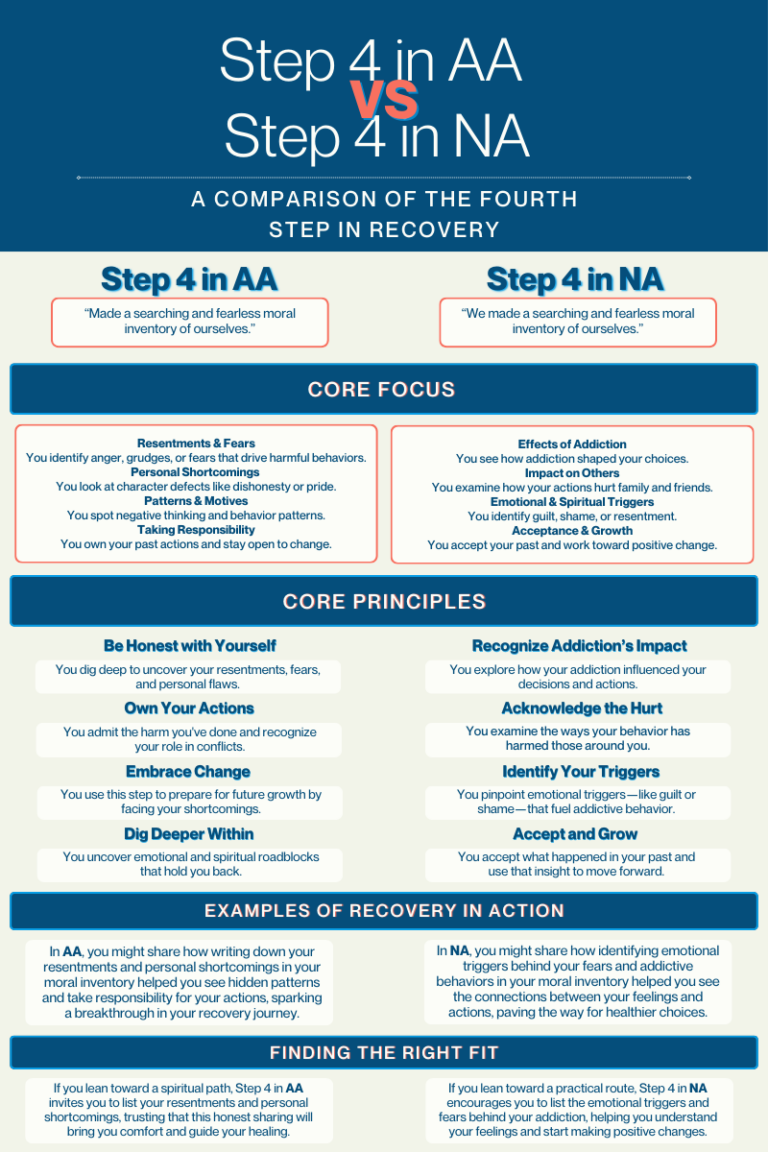
Step 4 AA vs. Step 4 NA: Small Differences, Same Heart
While the wording of Step 4 is the same in both programs, there are some differences in how it is approached:
- Step 4 AA: Focuses on how alcoholism shaped your behavior and relationships.
- Step 4 NA: Look at all forms of addiction, including how habits like lying or isolation kept you trapped.
Both programs agree that Step 4 is all about clarity, not judgment.
Your inventory is a map—not of who you were, but who you’re becoming.
Check out the comparison graphic below:
What Comes After Step 4?
Step 4’s honest self-reflection prepares you for Step 5, which is: “Admitted to God, to ourselves, and to another human being the exact nature of our wrongs.”
Here’s how they connect:
- Step 4 AA & NA is about writing your truth—facing resentments, fears, and harm you’ve caused.
- Step 5 AA & NA is about speaking your truth—sharing that inventory with someone you trust to release shame and begin healing.
Think of it this way: Step 4 helps you navigate the stormy seas of your past.
Step 5 involves dropping the anchor, allowing you to finally steady yourself.
Sharing your inventory isn’t just confessing—it’s freeing yourself from isolation and proving you’re worthy of forgiveness.
The weight you’ve carried starts to lift, breath by breath.
Frequently Asked Questions
What’s the purpose of Step 4?
Step 4 helps you identify patterns like resentment, fear, or dishonesty that fueled addiction. By writing them down, you gain clarity—not to dwell on the past, but to build self-awareness and start healing.
How do I complete Step 4 without feeling overwhelmed?
Break it into small pieces: write one resentment or fear a day, use a sponsor’s guidance, and remind yourself this isn’t about judgment—it’s about growth. Progress, not perfection, is the goal.
What if I don’t want to face my past?
Fear is normal. Start with small, less painful memories first. Remember: Step 4 isn’t about reliving pain—it’s about understanding it so you can let it go and reclaim your future.
What comes after Step 4?
Step 5 follows, where you share your inventory with a trusted person (like a sponsor). This step helps release guilt, rebuild trust in yourself, and prove you’re not alone in your struggles.

Key Takeaways
- Key Takeaways
- Step 4 is about self-reflection and taking an honest inventory of your past.
- It helps identify harmful patterns, fears, and resentments that contribute to addiction.
- Your inventory is a tool—use it to grow, not self-punish.
- Facing the past allows for healing and growth.
- Step 4 sets the stage for Step 5, where you share your inventory with someone you trust.
Take The Next Step to Recovery at Cornerstone
At Cornerstone Healing Center, we know how hard it can be to reflect on the past.
Our programs guide you through every part of your healing journey—not just the 12 Steps of AA or NA, but also the emotions, fears, and breakthroughs that accompany them.
We blend evidence-based therapies, 1-on-1 counseling, and group support to help you heal mind, body, and spirit.
Facing the past is brave.
Let us help you turn that bravery into a future where shame doesn’t hold the pen.
Your story isn’t over—it’s just beginning.