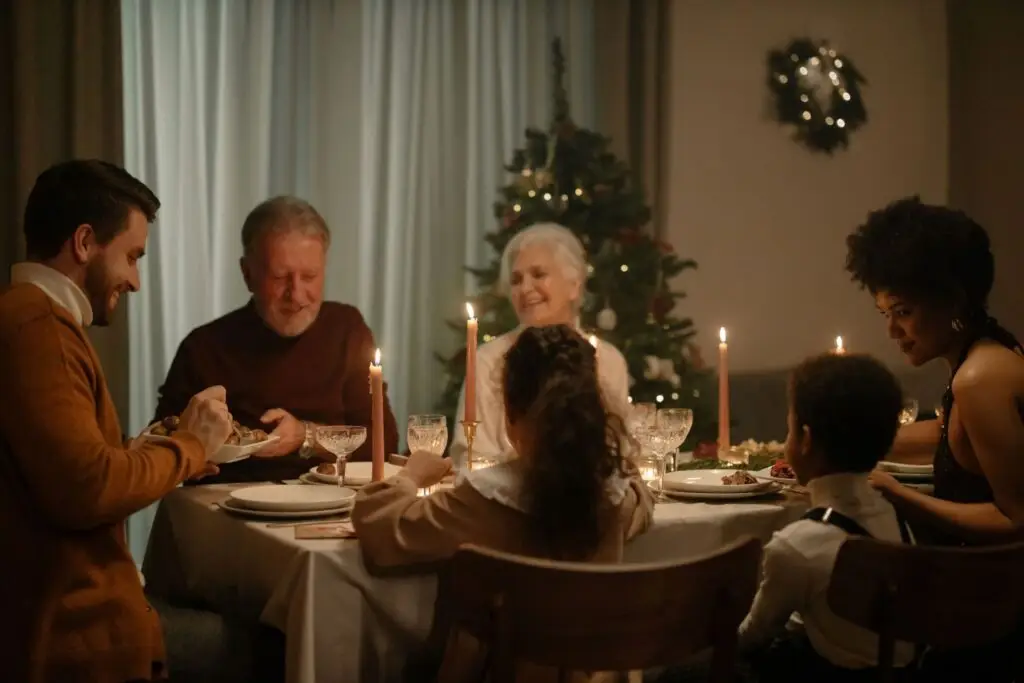
The turkey is on the table, your family is together, and then someone makes a comment about politics.
A comment about politics can change the mood at the table quickly. Political conversations with family often get tense around the holidays, and even more so after an election, when people feel strongly and don’t always agree.
Our very own Emma Thomas, LCSW, a clinician at Cornerstone Healing Center, recently joined Fox 10 Phoenix to talk about how to handle these moments in a way that protects both your peace and your relationships. Here’s what she recommends, including a simple skill you can use right at the table.
Listen to Understand, Not Just to Respond
Before you walk in the door, Emma suggests asking yourself one question: Am I going in to listen and understand, or to respond and get my opinion across?
When we’re focused on replying, we often stop hearing what the other person is saying. Emma points out that people frequently care about the same issues. They just come at them from opposing viewpoints. That’s okay.
Listening to understand doesn’t mean you have to agree. It means you give the conversation a chance to stay as a conversation.
What to Do When a Conversation Starts to Boil Over
Sometimes, no matter how hard we may try, family gatherings can escalate quickly. When a discussion starts heading toward a boiling point, Emma teaches her clients a simple skill called S.T.O.P. It comes from Dialectical Behavior Therapy (DBT), and you can use it in the moment, even with people watching.
S: Stop
Pause before you say or do anything. If you can, both people stop. Don’t fire back and don’t add another comment.
T: Take a breath
Take a real, deep breath. Emma explains that a single breath helps regulate your nervous system and tells your body, “We’re actually okay. It’s time to calm down.”
O: Observe
Notice what’s happening to you first. Emma says her own shoulders ride up when she starts to get heated. If you notice the same kind of cue, lower your shoulders and take another breath or two.
Then observe the other person. Do they seem open to talking? Or are they glaring at you, ready to come back at you in a second?
P: Proceed mindfully
Now choose what you do next with intention, instead of reacting.
Sometimes that means continuing the conversation calmly. Sometimes it means putting a pin in it and stepping away for now. Emma says that’s okay. Outside of heavy topics like politics, you probably have light, easy conversations with this person, and that relationship is worth more than winning an argument.
I value you more as a person than I want to just look at our differences and get in an argument with you. — Emma Thomas, LCSW, Cornerstone Healing Center
And if you need space to protect your own mental health, Emma joked, you can take your mashed potatoes to the kids’ table. prescriber.
Set Ground Rules Before Anyone Arrives
What if you already know the topics that will set people off, like a grandparent on one side of the table and an uncle on the other? Emma says planning ahead is a great idea.
Our brains like to know the plan. If this happens, then I’ll do that. Preparing before the day gives you something to lean on when emotions are high.
One way to prepare is to set ground rules before people come. Let everyone know certain topics are off the table. You can say it warmly: “It’s not that I don’t value your opinion or don’t want to hear it. I just want to keep things light-hearted. It’s the holidays, and we’re with family.”
People tend to do well with boundaries. When everyone knows how to behave at the table, and everyone follows the same rules, it’s easier to relax.
Keep a few backup topics ready
Even with ground rules, a conversation can start to drift. Have a few topics in your back pocket so you can steer it somewhere new. Emma’s example: “Hey, has anyone watched any sports lately?” Or you can ask if anybody’s seen any good movies recently or if they’ve found any new music they like.
You can also change the energy in the room completely by pulling out a game like Monopoly, Scrabble, or Uno.
A Quick Prep Checklist
- Decide your goal: listen first, respond second.
- Choose a ground rule and how you'll say it.
- Have two or three backup topics ready.
- Keep a game on hand.
- Know your exit. Be ready to put a pin in the conversation and step away.
- Remember S.T.O.P.: Stop, Take a breath, Observe, Proceed mindfully.
When the Holidays Feel Like More Than a Tough Dinner
Most family disagreements pass. For some people, though, holiday tension adds to stress or anxiety that’s already hard to manage on their own.
If that sounds familiar, you don’t have to handle it alone. Cornerstone Healing Center offers mental health treatment, including a Virtual IOP for mental health, so you can get support while keeping up with your routine.
You can verify your insurance, call (888) 583-3480, or read more about Cornerstone’s anxiety treatment options.
Explore Mental Health Treatment Programs
Verify your insurance or get in touch with our team to learn more about getting mental health support.