


Step 5 AA & NA is where courage meets healing.
After bravely facing your past in Step 4 AA, this step asks you to share your inventory with someone you trust.
It’s not about judgment—it’s about releasing shame and realizing you’re not alone.
By speaking your truth, you lighten the weight of secrecy and start to rebuild trust in yourself and others.
Start Your Healing Journey Today!
Explore our residential, outpatient, and virtual addiction treatment programs at Cornerstone.

What Is Step 5 in AA and NA?
Step 5 AA states: “Admitted to God, to ourselves, and to another human being the exact nature of our wrongs.” 1
Step 5 NA states: “We admitted to God, to ourselves, and another human being the exact nature of our wrongs.” 2
This step involves sharing your Step 4 inventory—your resentments, fears, regrets, and past mistakes—with someone you trust.
It’s a deeply personal experience, and while it can feel intimidating, it also creates space for real growth.
It’s a chance to:
- Let go of guilt – Speaking your truth breaks addiction’s cycle of isolation.
- Gain clarity – Hearing yourself say it helps you see patterns clearly.
- Start healing – You’ll feel lighter, like setting down a heavy backpack you’ve carried for years.
Watch: Insight from Our Founder on Step 5
Step 5 can feel like one of the most vulnerable parts of the recovery journey—but it can also be one of the most freeing.
In this short video, Cornerstone Healing Center’s founder and CEO, Estil Wallace, shares personal insight and advice on working through Step 5, offering encouragement for those preparing to take this powerful step toward healing.
The Importance of NA and AA Step 5 Explained
Addiction often thrives in secrecy.
Many people carry shame, regret, and unspoken pain, which can become barriers to healing.
Step 5 AA & NA allows you to break free from isolation by sharing your truth with someone who understands.
This step also fosters accountability and helps you see patterns in your behavior more clearly.
By saying these things out loud, you take responsibility for your actions while also learning self-forgiveness.
NA And AA Step 5 Examples Of Common Struggles
Step 5 AA & NA asks you to share deeply personal truths—a process that can bring up fear, shame, or doubt.
Here’s how to navigate these feelings:
- “What if they judge me?” → Choose someone who’s been through Step 5 themselves (like a sponsor). They understand this isn’t about blame—it’s about healing.
- “I’m too ashamed of my past.” → Separate your actions from your worth. Mistakes don’t define you; courage to admit them does.
- “Will this even help?” → Start small. Share one part of your inventory at a time. Relief often follows the hardest truths.
These fears are normal, but remember—Step 5 is NOT about punishment.
The person you share with (often a sponsor, mentor, or trusted individual in recovery) is there to listen with compassion, not to judge.
How to Work Through Step 5 AA And NA
Completing Step 5 often brings a profound sense of relief and lightness, enabling you to move forward with a clearer mind and a lighter heart.
Here are some simple steps you can take to help:
- Choose wisely: Share with a sponsor, therapist, or recovery mentor—someone who “gets it.”
- Prepare: Review your Step 4 inventory beforehand. Highlight what feels hardest to say.
- Breathe: It’s okay to pause, cry, or take breaks. This is your journey.
- Listen: The person you share with might offer insights that change how you see your past.
Quick Tip: Begin with One Brave Step!
If the full inventory feels overwhelming, start by sharing just one fear or resentment—sometimes, naming that first truth cracks the door open for the rest. Healing isn’t about perfection; it’s about the courage to begin.
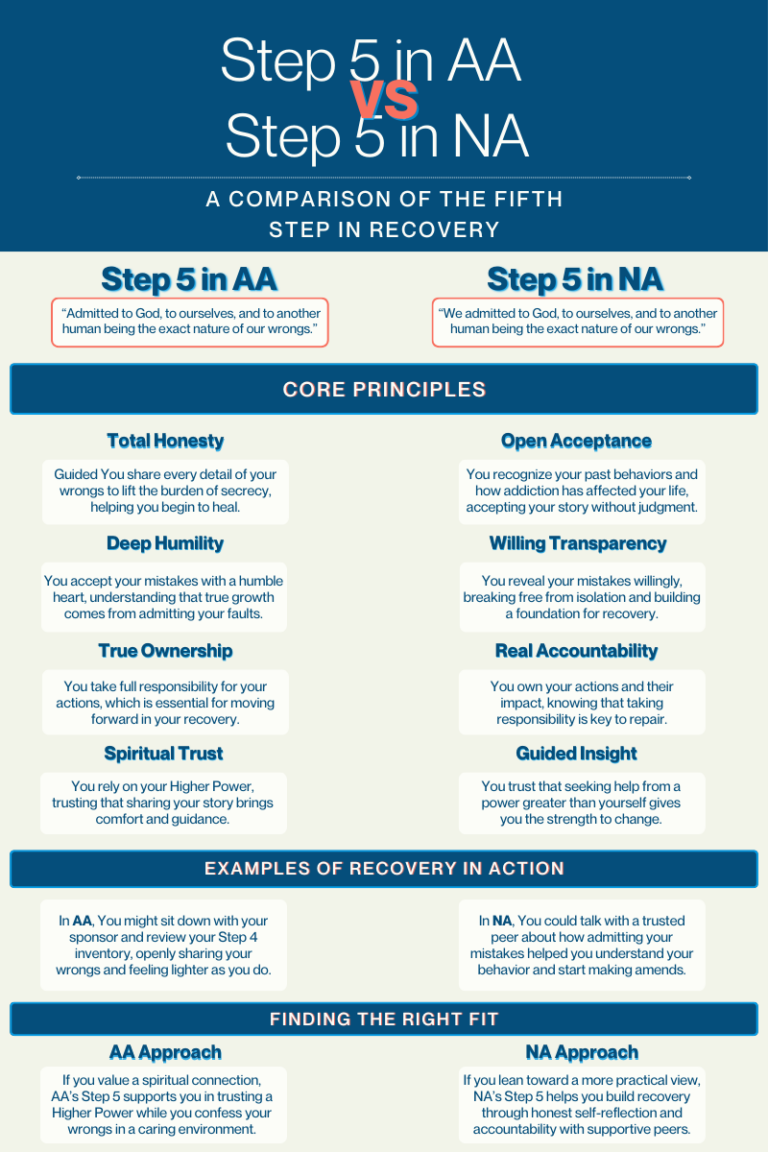
Step 5 in AA vs. Step 5 in NA
While Step 5 is pretty much the same in both programs, there are just slight differences:
- Step 5 AA: Often ties Step 5 to spiritual growth, encouraging confession to a higher power.
- Step 5 NA: Focuses on personal accountability, emphasizing honesty as a path to self-forgiveness.
The Bottom Line?
Step 5 in AA and NA is about liberation—freeing yourself from secrets that once kept you trapped.
In AA, you share your truth in the gentle light of a Higher Power and a trusted guide; in NA, you hold up a clear mirror to see how addiction shaped your choices.
Both paths lead to the same healing truth: naming your past isn’t about shame—it’s about reclaiming your power to choose what comes next.
Check out the comparison graphic below, for an even better understanding:
What Comes After Step 5?
Step 5’s honesty sets the stage for Step 6, where you move from reflection to action.
Here’s how they connect:
- Step 5 AA & NA: You release the weight of secrecy by sharing your inventory.
- Step 6 AA & NA: You decide you’re ready to leave behind the behaviors that no longer serve you.
Think of it like this:
- Step 5 AA & NA is like cleaning out a cluttered closet—you’ve sorted through what’s inside.
- Step 6 AA & NA is deciding what to donate, what to keep, and making space for something new.
This transition isn’t about overnight change.
It’s about building willingness to trust the process, to forgive yourself, and to believe that growth is possible.
Frequently Asked Questions
What’s the purpose of Step 5?
Step 5 helps you release guilt and shame by admitting your past mistakes to someone you trust. Sharing your Step 4 inventory out loud breaks the isolation of addiction, builds accountability, and opens the door to self-forgiveness. It’s not about punishment—it’s about freeing yourself from secrets so you can heal fully.
Who should I share my Step 5 with?
Choose someone experienced in recovery, like a sponsor, therapist, or mentor, who understands the 12 Steps and won’t judge you. This person should offer empathy, not criticism, and remind you that honesty is the foundation of growth. Avoid sharing with someone who might react with anger or blame.
What if I’m afraid of being judged?
Fear is normal, but Step 5 is designed to minimize the feeling of shame, not amplify it. The right listener (like a sponsor) has likely faced similar fears and will focus on your courage, not your flaws. Their role is to help you see strength in vulnerability, not to condemn.
What if I forget parts of my inventory?
Step 5 isn’t about perfection—it’s about willingness. If you forget something, you can revisit it later. What matters is starting the process. Recovery is a journey, and you’ll have chances to refine your honesty as you grow.
What comes after Step 5?
Step 6 follows: “Were entirely ready to have God remove all these defects of character.” After releasing your past in Step 5, Step 6 prepares you to let go of harmful patterns and embrace change. Think of it as shedding old habits to make room for new growth.

Key Takeaways
- Key Takeaways
- Step 5 is about admitting past wrongs out loud to another person.
- It helps release guilt, shame, and secrecy, making space for healing.
- Choosing a trusted person to share with is important for a positive experience.
- This step sets the stage for growth and transformation in Step 6.
Finding Lasting Recovery Today at Cornerstone
Step 5 and Step 6 are transformative, but they don’t have to feel overwhelming.
At Cornerstone Healing Center, we integrate the 12-step philosophy with evidence-based therapies, such as Cognitive-Behavioral Therapy (CBT) and specialized trauma counseling, to help you achieve a comprehensive recovery.
Whether you need help finding a sponsor, processing emotions, or rebuilding self-trust, our team—many of whom are in recovery themselves—will walk with you.
Your past doesn’t define you. Let us help you build a future you’re proud of.