



Recovery takes honesty, hope, and a desire to change.
The 12 Steps of AA and NA act like a roadmap, guiding you toward freedom from addiction through small but meaningful steps.
Each step builds on the last, helping you to grow, learn to trust others, and start repairing those relationships you thought were irrepairable.
Where Step 1 was all about admitting you can’t control your addiction, Step 2 of AA and NA is about leaning on something bigger than yourself—a reminder you don’t have to do it alone.
Take Your Next Step Towards Healing Today
Reach out to Cornerstone to learn more about our residential, outpatient, or virtual programs in Arizona.

What Is Step 2 in AA and NA?
Step 2 of AA reads:
“Came to believe that a Power greater than ourselves could restore us to sanity.”
—Alcoholics Anonymous, p. 591
Step 2 of NA reads:
“We came to believe that a Power greater than ourselves could restore us to sanity.”
—Narcotics Anonymous, Step Two
While the wording is nearly identical, Step 2 marks a crucial shift from the raw honesty of Step 1 to the beginnings of hope.
It introduces the idea that even though addiction has caused chaos, recovery is possible—not through sheer willpower, but through trust in something greater than yourself.
This “Power greater than ourselves” doesn’t have to be religious.
In both AA and NA, the concept is open-ended. It might be a supportive community, the process of recovery itself, or a spiritual connection that gives your life meaning.
For many, it’s simply the belief that healing can happen.
Step 2 is about opening your heart to possibility.
It’s not about having all the answers—it’s about believing that there are answers, and that you don’t have to find them alone.
Why Step 2 Matters in Recovery
Addiction can leave you feeling trapped and powerless, but this step reminds you that you don’t have to do it alone.
Step 2 of AA and NA is about discovering hope and believing that change is possible. It encourages you to let go of control and that it’s okay to stop trying to control everything and ask for help.
That help might come from a higher power, a recovery group, or friends who understand your struggle. This step is where hope starts to grow.
Common Struggles with Step 2
Many people struggle with Step 2, especially if they’ve been hurt by religion or doubt that anything can help.
You might feel:
- “Nothing will work for me.”
- Angry at religious ideas.
- “I don’t deserve help.”
To Work Through This:
- Talking to others in recovery about their experiences with Step 2 of AA or NA
- Exploring different definitions of a higher power that feels comfortable
- Reflecting on past moments where things worked out despite personal efforts
Quick Tip: Step 2 Is About Hope, Not Religion.
Step 2 of AA and NA isn’t about religion—it’s about hope. Leave your doubts in the past. Have faith that you can improve with guidance. Whether your higher power is spiritual, personal, or practical, the goal is to trust that change is possible and you don’t have to do it alone. The key is not what your higher power is but that you are willing to believe in something beyond yourself.
What is a “Higher Power”?
Many people hesitate at Step 2 because they associate “higher power” with religious belief.
However, in recovery, a higher power can take many forms.
It might be:
- The strength of your recovery group.
- The love and support of family and friends.
- Values like honesty, courage, or kindness.
- Nature, the universe, or the simple belief that things can get better.
The key is to remain open to the idea that something outside yourself can help guide your recovery.
Step 2 in AA vs. Step 2 in NA: What's the Difference?
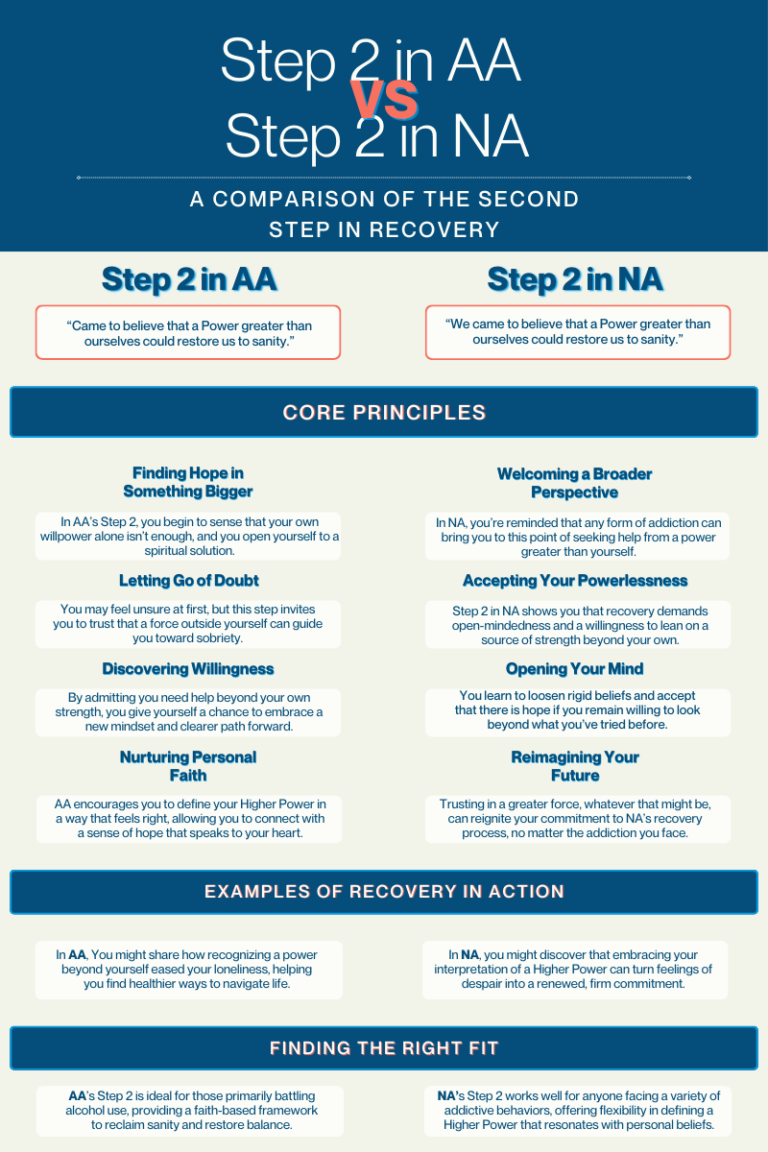
While Step 2 in AA and NA shares the same wording, the way each program approaches it can differ:
- AA Step 2: Emphasizes spirituality and often connects belief in a higher power to faith or a spiritual force for overcoming alcoholism.
- NA Step 2: Takes a broader approach, allowing individuals to define their higher power in a way that feels personal and meaningful to them. (page 42-43) 2
Both programs stress that belief in a higher power is deeply personal and doesn’t have to align with any specific religion; choose what works best for you.
The graphic below highlights how Step 2 is interpreted in each program:
How to Embrace Step 2 and Move Forward
Working through Step 2 requires willingness and an open mind.
Here are some ways to engage with this step:
- Attend meetings and listen to different perspectives – Hearing how others interpret their higher power can provide insight.
- Talk to a sponsor or mentor – Guidance from someone who has worked through this step can help clarify its meaning.3
- Try daily reflections or meditation – Focusing on moments of peace or clarity can help build trust in something greater.
- Write down past experiences where help came unexpectedly – Recognizing moments of unexpected support can reinforce belief in something greater than yourself.
What Comes After Step 2?
Step 2 is about admitting you can’t heal alone and trusting that something bigger than addiction exists. It’s not about religion or answers—it’s about hope.
Maybe that “something” is the collective strength of people in recovery, the love of family, or a quiet sense that life can be different. This step asks you to loosen your grip on control and say, “I need help, and that’s okay.”
How Step 2 Leads to Step 3
Step 2 plants the seed of trust.
Step 3 is where you let that trust grow into action.
Once you believe support exists, Step 3 asks you to actively lean on it, like letting others guide you through a storm instead of fighting it alone.
Recovery isn’t about weakness; it’s about courage.
Step 2 teaches you to see the lifeline. Step 3 teaches you to hold on.
Frequently Asked Questions
What is Step 2 in AA?
Step 2 says: “Came to believe that a Power greater than ourselves could restore us to sanity.” In simple terms, it’s about realizing you don’t have to fight addiction alone. It means opening your mind to the idea that something bigger than you—like a group, a spiritual force, or even the support of others—can help you heal and think clearly again.
Do I have to believe in God for Step 2?
No. Your “higher power” can be anything that gives you strength or hope. For some, it’s the support of a recovery group, nature, or values like honesty and courage. It’s not about religion—it’s about trusting that something out there can help you.
What if I don’t understand the “higher power” idea?
It’s okay to feel unsure. Many people struggle with this at first. Try talking to others in recovery about what works for them. Think about times when help came from unexpected places—like a friend’s kindness or a moment of calm. Your understanding can grow over time.
What happens after Step 2?
Step 3 is next. It’s about taking action by deciding to let your higher power guide your recovery. Step 2 helps you believe help exists; Step 3 is about actually using that help to make real changes. Think of it like this: Step 2 gives you hope, and Step 3 turns that hope into action.

Key Takeaways
- Key Takeaways
- Step 2 of AA and NA focuses on believing in a power greater than oneself as part of the recovery process.
- A higher power can be defined in personal, non-religious ways.
- Many struggle with Step 2, but openness and willingness can help.
- Accepting Step 2 helps build the foundation for the rest of the 12 steps.
Continue Your Healing At Cornerstone
Step 2 is about learning to believe healing is possible—not because you have it all figured out, but because you don’t have to carry this weight by yourself.
At Cornerstone Healing Center, we’ve been there, too, and we know how shaky that first flicker of hope can feel.
Here, you’ll find people who listen without judgment, stand beside you without pressure, and help you uncover your version of strength—whether that’s through others who understand, quiet moments of peace, or the simple truth that you deserve a better life.
We’ll walk this path with you, one step at a time.
If you’re ready to take that next step, our addiction treatment programs offer compassionate support, personalized care, and a place where lasting recovery is truly possible.
Reach out to us today to get started.