Recovery Story, Struggle & Strive
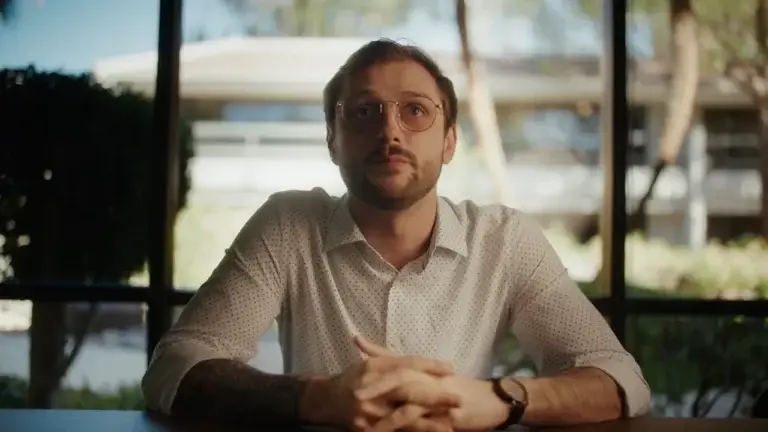
Welcome to another episode of the Struggle and Strive podcast with Cornerstone Healing Center. Today it is an honor to have an old friend and colleague with me today. I've got Chris Riley from Crossroads Inc. How you doing, Estole? I'm great. How are you today, Chris? I'm doing well, man. Thanks for having me out.
Yeah, thanks for coming out. This weather's amazing this time of year in Phoenix. Absolutely. It's it's going to continue to get hotter, but let's enjoy it while we can. That's right. I feel like the first part of the summer, it's like being a a frog in hot water. You don't I feel like early June isn't that bad. Even though it does get hot, it it starts to get a little warm, but you know, in the 90s, 95s, that that's still doable.
Yeah. It's like July. A It's like August. Yeah. When the heat's just dragging on, you're just done with it. get give me to December. Have you did you grow up here in Phoenix area? more or less. I I moved out here in 1986 from California. I was a Southern California kid. So I was 14 when I moved out here.
Okay. And I grew up Where'd you go to high school? Barry Goldwater. Okay. Yeah. Absolutely. Up there on 27th A. It's funny when we moved out here, it was the end of 8th grade and Barry Goldwater was a brand new school. So, I was the first freshman class to go through that school and and graduate there was all four years. Wild. Yeah.
I met Barry Jr. for the first time just like a few weeks ago. Wow. Just randomly. Very cool. Yeah. Interesting guy. Yeah. I bet. So, so you went to high school out here. you're in recovery. So, I'd love to talk a little bit about some of that.
Okay. So, you so you did spend your adolescence out here. Yeah. What when what did drugs and alcohol look like for you? When how did that get how did that start? Yeah, so it it it really started out here u probably about the age of 15. My neighbor and I were swimming in his pool and his mom had some beers in the fridge and we're like, "Let's try it out." Sounds legit to me.
Yeah. I mean, so we got on the roof and we like shotgun a beer and then jumped in the pool and I remember getting this warm feeling, you know, and and then it it just kind of took off from there. And if I can pause you, I think anybody would get a warm feeling from what you just described. That sounds like a great day for most especially for dudes like Yeah. You want to have a cold beer and then jump into my pool from the roof.
From the roof. It was It was what movies are made of, you know, and and it was of course in the middle of the summertime, so it was hot. And but you know, so I I dabbled a little bit with alcohol, but I raced BMX out here bicycle motocross and from 1986 to 1990. So, I was really in involved in that. And so I didn't really get involved too heavy into drugs
or alcohol at that point. But when I stopped racing at 18, that's when it just opened up at the floodgates, you know, the marijuana and the cocaine, the methamphetamine, it was speed back then, you know, crank. And once I once I hit that, it was just it was just off the ground, off the off the tracks running.
Yeah. Yeah. How old were you when you when you sobered up then? I was 32 about I was about to turn 33 and so I got sober January 22nd 2005 and I turned 33 in February of of 2005. So right at that pivotal point in my life. First of all, congratulations on your sobriety. congratulations on your walk with God, on your amazing family, your amazing career. It's been personally it's been an awesome experience to be a fly on the wall and watch your life grow and expand in so many ways. Yeah, appreciate that.
if you don't mind, I know the story. Would you mind telling us the story of when you were newly sober living it because you checked into Crossroads. Well, let's let's get into that. Okay.
What what got you to Crossroads? How did you how'd you decide I'm I tap out. I need help. How did that happen? Yeah. So, at 32, I'd been running a muck, you know, job to job to job to no job, apartment to apartment to no apartment, living on couches, living on couches, living on the streets. And I found myself at I17 in Camelback and, was getting ready to jump off the bridge into traffic and a a voice inside me said, "Go to the VA." Because I'm a veteran. I served from 93 to 97.
Thank you for your service. Thank you. And so I went to the VA and and I sat down with a counselor and he said, "Yeah, we you need residential treatment or you need a halfway house type deal." And I said, "Okay." He said, "You you can go to this place called Cass or you can go to this place
called Crossroads." No choice. I said, "Man, set me up with Crossroads." I had no idea what Crossroads was. And they sent me to the location at 35th Avenue in Orangewood. Yep. I know it. And it's crazy. I used to drive by there all the time to go get dope and I never knew that place was there. Never knew it was a halfway house, never knew it was transitional living, but here I am and I'm like, "Wow." So, they they sent me there on a VA contract and back then, the VA would pay for 30 days of treatment, then you would pay for 30 days of treatment, and the VA would pay for 30 days of treatment. So, you get 90
days, of treatment for basically 30 days. And I was, you know, I was still in my addiction. And I was like, "Well,
that sounds like a good deal to me." You know, three meals, a hot cot, and so I that's what I did. And I got a sponsor and went to meetings and did the things that, you know, was supposed to do, but I wasn't really bought in, you know, and I I I knew I wasn't going to stay sober.
I mean, it's just there kind of going through through the motions. So, in about June of 2004, that was 2004. So, June of 2004, I left. I I went back to the couches, the couches, the streets, the streets, to the drugs, to the booze. And finally I got a job. And it was it was weird. I would get paid on the 5th and the 20th. And it was like clockwork. I'd get paid on the 5th.
I wouldn't show up till the 7th. I'd get paid on the 20th. I wouldn't come back till the 23rd. And finally the
administrator of the clinic I worked at said look I had told her that about crossroads and she said you know I called her up one morning on the on the 22nd of January 2005 and I said do I still have a job? And she's like if you go to Crossroads you'll have a job. So I said all right. So I kind of went there on you know I'm I'm going to one last ditch
under some duress. Under some it works well that way. I like a little skin in the game. Yeah. You know, I mean, and and it was going to hold me accountable to these folks. Yeah. And so the the real turning point though was so that was January 22nd.
I I got dropped off at Crossroads West again and was in the bunk house, which was like an overflow area. And I went to work the next week. And I started going to church with my buddy who I worked with for Bible study on Wednesday nights. You still have that buddy? You guys still friends? Yeah, still friends. I love it. Yeah. John Ross. Yeah. Good guy.
And so I started going to this Bible study with him really under the pretense I could get off property. I love it. You know, I was always working an angle, you know. Absolutely. But I started finding this this need being felt and this connection being made and and that the church I was going to is off of 34th Street in Choya and the pastor's name there is Pastor Beers of all names and I was like
man this is a sign you know this got to be God wants me sober sent me Pastor Beers send me to Pastor Beers and so after about about six weeks I got saved and about 6 weeks later on April 3rd. I got baptized.
That's what I want to know about. I want to hear about the baptism story. So, the the baptism was what changed it all. I went in and I was the only one getting baptized that day and he turned No. No pressure. Yeah. You know, and I was the new guy because it was a small church and I was I was known as a drug addict in the church who's getting well by God.
And so he said, "Do you want to say anything to the congregation?" And I said, you know, well, you know, I'm I'm here to accept Jesus Christ in my life and as my Lord and Savior. So, he's getting ready to to dunk me and he says, "Do you want to say anything before I put you under?" I said, "Yeah." I said, "Just when you put me under, hold me down there for a little longer than you normally would somebody." And when he did, I said, "Please remove the obsession of alcohol and drugs from my soul." And when I came up out of that water, it was night and day. It was gone. It's been gone since that day.
April 3rd of 2005 was the resurrection day. Let's go. And I mean that was my my sobriety dates 12205, but April 3rd 2005 is when everything changed. Like I went
that day back to Crossroads, fired my sponsor because the the week prior I said we had to get our card signed, our meeting cards. Yeah. And he's filling out my card. He's like, "What step are you on?" I was like, "What do you mean what step am I on, dude? If you don't know what step I'm on, that's a problem, you know? I mean, you're my sponsor. So, I went back, fired him, got a new sponsor, a guy who was full of fire and brimstone. Love it.
And I mean, he told me everything I didn't want to hear about myself. Spicy. Yeah. Spicy guy. Mark Ross. I don't know if you ever knew Mark. I don't think I do. Yeah. Just a great guy. I mean, he he would I he'd give me assignments and I'd write things out that I thought he wanted to hear and he'd just shred them and throw them away and this isn't what I want to hear. You know, I love it. Yeah.
You've got a reputation for being that way. Yeah. Well, you know, I've learned it from him. You know, I'll blame him. But, yeah, it it just it it changed and and from that point forward, I've been a member of our church, Cornerstone Christian Center out in Aenddale, Arizona. I stayed at Crossroads for 16 months. it was a transitional living facility back then, so you could stay a little bit longer.
We didn't have like traditional treatment there. It was based, 12step base. And I finally one day I was teaching relapse prevention and back to basics at the west campus and doing some volunteer work. I love that back to basics workshop by the way. It was great. Yeah. I went through it a couple times over the years. It's fantastic.
And I went to Lee Pioski who was the executive director at the time and I said, "Man, I want a job here." And I didn't know what I was doing. I was I just wanted to help other addicts and alcoholics. I wanted to help them get sober. I had no idea what behavioral health was. I had no idea what substance abuse treatment was because I had never been through treatment. I'd been through the transitional living facility portion.
And he's like, "All right, well, call me. Call me every Wednesday and we'll see if we can get you a job." So, a year later after calling every Wednesday, he's like, "Are you ready?" And I said, "Yeah, I'm ready." And what had happened is St. Luke's Health Initiatives had granted Crossroads $150,000 to run a
meth pilot program for five candidates to go through 21 days of treat of actual treatment. and they would track the results and give us data and analytics and those types of things. And was that like the first iteration of Right? It it was it that's what Right Track is. Got it. Yeah. Yeah. Right was born from it was called the Meth Pilot program. And so I started teaching that class.
Wait, wait, slow down. It's called the meth. It was called the meth pilot program. It was like for methamphetamine. It was strictly for methamphetamine. Interest. I didn't realize that. Yeah. And then we opened it up after it was a two-year contract with St. Louis Health Initiatives. Put that copper pipe down. I have a program for you. Yeah. Put that glass pipe down.
Yeah. Yeah. Stop stealing stuff. Let's Yeah, stop stealing things. But yeah and we had it tracked by an analyst named BJ Tetro and we would do UAS and you know and and treatment programs or treatment plans, discharge planning in 21 days and basically they got to sleep for the first three days. They had to do an autobiography within the first three days. But for methamphetamine addicts, sleep was super important.
And cereal. Yeah. Yeah. And cereal. Sleep. Cereal. Milk. That's detox. Absolutely. And the old crossroads way wasn't working for meth addicts. You know, come here, get a job, start paying your rent. And within three days, that wasn't working.
Yeah. And so we got this grant. We put together this program. And u it took off like wildfire. And for two years, I mean, we were just rotating people in and out and and and some of those people are still sober today. Some of them are still out there. They they they used to nickname themselves the methylators. And there's still some methylators out there. I probably know one or two of them.
You sure? I'm sure you do. And so we did this pilot program. Two years was up and then we opened it up to opioids. We opened it up to alcoholism, to marijuana, cocaine. We tweaked the program a little bit. We made it we made it initially a 30-day program, then a 45day program, then a 60-day program. we found that doing 60 days of treatment really benefited the clients.
you know, having to get out and go to work and focus on bringing there's a there's a lot to be said about going out and working for a month, getting your first paycheck, being a you know, a newly recovered drug addict, and then coming in and giving your money to Crossroads. I mean, you're either going to do it or you're not going to do it.
And most of the time, they weren't going to do it. And that's a big ass, but it, you know, when you do that, you're investing in your recovery. Yeah. And we were seeing just an incredible amount. I mean there was like the the analytics that we had done there was like a 75% success rate which was just unheard of. Yeah.
So we took that we made it into this program that was available to all people with all drug addictions and in 2013 everything changed. DHS the department of health services went away with the transitional living facility licensing. you had to become a a treatment center, a BURF, a behavioral health residential facility, or not be licensed. And some of our contracts that we had with the Veterans Administration, with the US pre-trial probation department, you had to have a license to be contracted with those entities.
So, we became a treatment center. And a year later, Arizona became a Medicaid expansion state. So what that meant was that people on Medicaid that have substance use disorder diagnosis could get treatment and Medicaid would pay for it.
Yeah. Game changer. A complete game changer. At that time we had five facilities. We were housing about 20 let's just call it 225 people. And we call those the original five facilities. Crossroads East, Crossroads West, Midtown, Midtown Flower, Flower and Arcadia. Yep. When we started taking Medicaid, we opened up five additional facilities within a very short period of time.
because there was more people than we could help. You know, we'd have 15, 20, 30 people at the door wanting to come in for treatment and only have 10 beds available and we weren't doing a service to those men and women. So, we started opening up, we first opened up Red Mountain, which is out in Mesa. Then we opened up the extension, facility with its first medical clinic.
Yeah. I'm I'm just encouraged that Crossroads A has been around for so long. Yeah. B does so much good that's needed in our community. And C, I couldn't be more tickled that one of my close friends that I got sober with, you know, a gazillion years ago is at the helm. I'm I am absolutely blown away with the stuff that you guys do there and blown away with that that I'm buddies with the guy that runs the place.
I appreciate that. And you know, it's you and I have the same mentality. It's not where they gets over, it's do they get sober. And I mean, if we can stay, it's not about it's about collaboration, not competition. 10,000%. And I think you and I have got a great relationship both working and personal for a long time.
100%. 100%. And I remember meeting you over at East for the men's Tuesday night stag. And it's it's been a great relationship, man. Yeah. And I appreciate you. Hey, hey,
The care behind the story
Free, confidential and available 24/7. Our admissions team will verify your insurance and help you find the right program.
Meet The Team
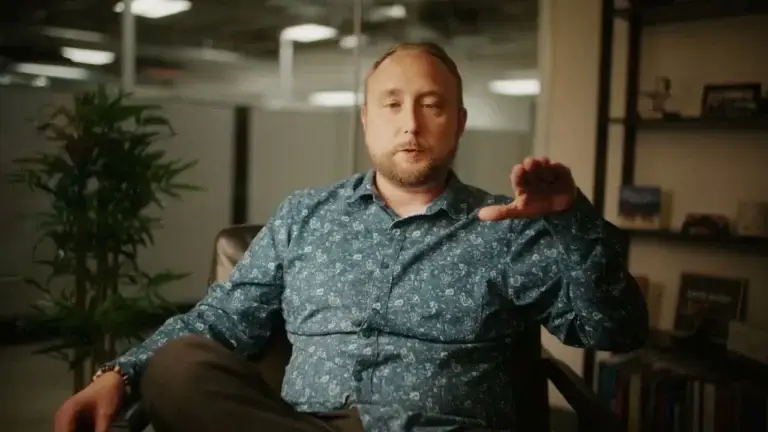
Dane Perikly, Program Director at Cornerstone Scottsdale, explains what happens at our Scottsdale program and shares the story of a client who wanted to give back.
Meet The Team
Clinical Director Nate Bush explains his role, what treatment at Cornerstone is really like, how we care for mind, body and spirit, and why he does this work.
Recovery Story, Struggle & Strive
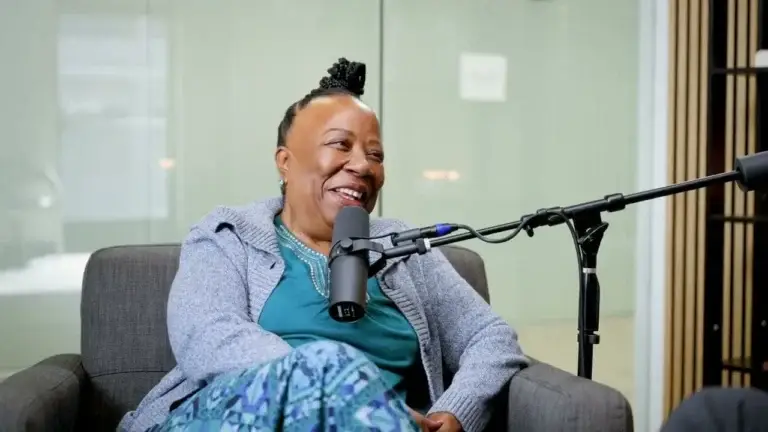
Nita Russell, a therapist at Cornerstone, talks about her own recovery, why she went into behavioral health, the clinician who changed her life and how she keeps doing the work without burning out.
To provide the best experiences, we use technologies like cookies to store and/or access device information. Consenting to these technologies will allow us to process data such as browsing behavior or unique IDs on this site. Not consenting or withdrawing consent, may adversely affect certain features and functions.