

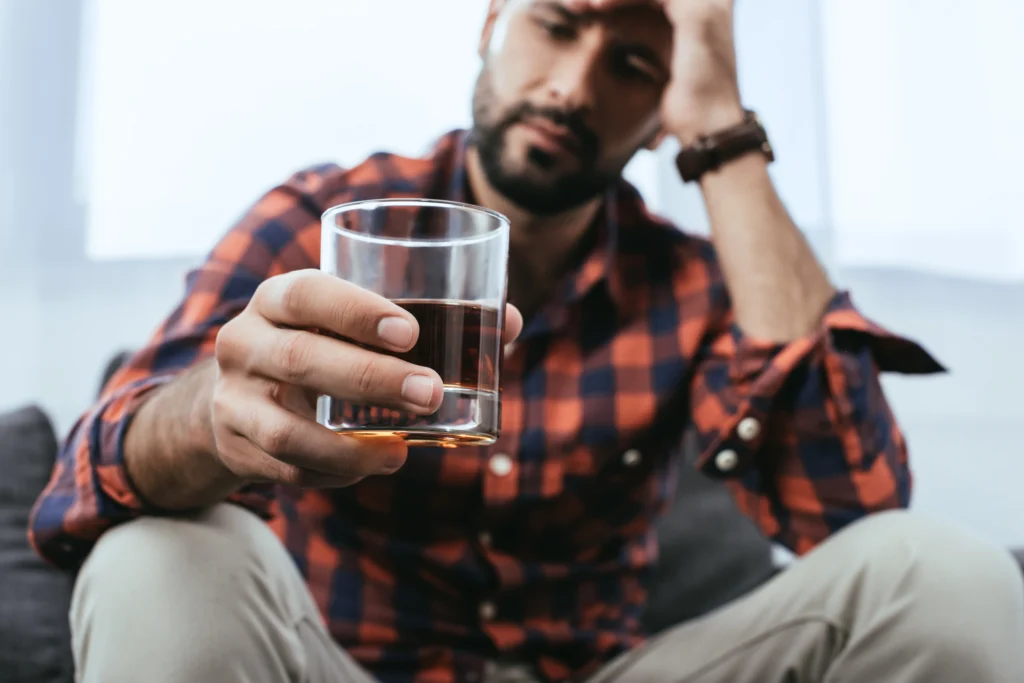
Many people reach for a drink or two at the end of a hard day. It makes sense to look for relief after a difficult conversation, a stressful week, or a wave of anxious thoughts that just won’t quiet down.
The impulse to soothe yourself with alcohol is fairly common, and there’s no judgment in acknowledging it.
But while alcohol may feel like it helps in the short term, it can worsen anxiety, depression, and overall mental well-being over time.
Understanding how alcohol affects mental health is the first step toward making choices that support your healing, instead of working against it.
In this article, we’ll share the brain chemistry behind why alcohol feels good in the short term, the negative cycles that are created with regular drinking, and what you can do to actually support your mental health instead of masking your symptoms with more alcohol.
Key Takeaways
- Key Takeaways
- Alcohol affects brain chemistry by altering neurotransmitters like GABA, dopamine, glutamate, and serotonin, which can temporarily change mood and behavior.
- While drinking may provide short-term relief from stress or anxiety, regular alcohol use can worsen depression, anxiety, and overall mental health over time.
- Alcohol and mental health often create a cycle where people drink to cope with symptoms, but the drinking ultimately intensifies those same symptoms.
- Heavy or long-term alcohol use can lead to lasting changes in brain function, including memory issues, difficulty with decision-making, and increased emotional instability.
- Many people experience improved mood, better sleep, and greater mental clarity within weeks or months after reducing or stopping alcohol use.
- If alcohol use and mental health struggles feel connected, integrated treatment and professional support can help address both at the same time for lasting recovery.
How Alcohol Actually Affects Your Brain
Alcohol is a central nervous system depressant. That means it slows down brain activity, which is why that first drink often produces a sense of calm or ease.
To understand why this happens, it helps to know that the brain utilizes many chemical messengers called neurotransmitters, and alcohol interferes with several of them at once.
- GABA is your brain’s natural braking system. It quiets neural activity and produces feelings of relaxation. Alcohol boosts GABA, which amplifies its calming, sedative effect.
- Glutamate does the opposite; it keeps the brain alert and active. Alcohol suppresses glutamate, which slows things down further and contributes to that hazy, slowed-down feeling.
- Dopamine is your brain’s reward chemical. It creates feelings of pleasure and motivation. Alcohol triggers a temporary dopamine release, which produces the “feel-good” effect that can make drinking habit-forming over time.
Alcohol also disrupts serotonin, the neurotransmitter most closely tied to mood stability. Think of serotonin as your brain’s mood regulator. Alcohol borrows against it in the short term, which is why many people feel low, irritable, or anxious the day after drinking. Your brain is working to rebalance what was temporarily thrown off.
Because of the way alcohol affects your brain chemistry, the initial sense of relief you feel is a real, physiological experience. Unfortunately, so are the effects that follow over time when you consume alcohol regularly.
The Relationship Between Alcohol and Mental Health
Alcohol and mental health are very interconnected. They feed off of each other in a way that can lead to cyclical problems over time.
People dealing with depression, anxiety, PTSD, or chronic stress often drink to take the edge off, because alcohol provides short-term relief from their symptoms.
Over time, however, repeated alcohol use depletes mood stabilizing neurotransmitters, disrupts sleep patterns, and activates the brain’s stress systems. These disruptions amplify the symptoms the person was trying to escape in the first place.
The result is a self-reinforcing cycle:
- Stress or mental health symptoms → drinking to cope → short-term relief → worsened symptoms → repeat
According to SAMHSA’s 2022 National Survey on Drug Use and Health, approximately 29.5 million people aged 12 or older had an alcohol use disorder in the previous year. A significant portion of those individuals also live with a co-occurring mental health condition.
Treating only one without addressing the other rarely produces lasting results. But when we recognize the relationship between alcohol and mental health, we can begin to make different choices and create real change.
Alcohol, Depression, and Anxiety
Alcohol and Depression
Alcohol is classified as a depressant drug, meaning it slows the central nervous system. That depressive effect can alter your mood over time, not just during the time you’re drinking.
Heavy drinking can trigger a depressive episode even in people with no prior history of depression, and it significantly worsens symptoms for those who already experience depression.
Because depression and heavy alcohol use so often develop in tandem, it can be difficult to identify which came first, and treating one without the other rarely produces lasting results.
Alcohol and Anxiety
Many people drink specifically to quiet social anxiety or take the edge off daily stress. The short-term relief people experience while drinking is part of what makes it a hard habit to change.
But people who drink can also end up with what’s often called “rebound anxiety” or “hangxiety.” As alcohol leaves the system, the brain compensates by decreasing GABA and increasing glutamate signaling.
This disruption to neurotransmitters produces heightened anxiety once the alcohol wears off, and you may feel more anxious than you did before you started drinking.
Over time, using alcohol to manage your anxiety can raise your baseline anxiety levels and reduce your brain’s natural ability to handle stress. What felt like a solution gradually became part of the problem.

How Does Alcohol Affect Mental Health Long-Term?
The effects of alcohol on mental health can become more serious for people who drink heavily or chronically over months or years. If you only drink moderately or occasionally, these long-term effects likely will not apply to you.
The changes that alcohol causes in the brain over time are part of what makes it so difficult to quit, even when someone genuinely wants to. When someone who has been drinking heavily stops, it’s common to experience negative emotional states like anxiety and irritability that can make withdrawal feel overwhelming.
Long-term and heavy drinking has also been linked to lasting changes in brain structure and function, including memory problems and difficulty with decision-making. In severe cases, conditions like Korsakoff’s syndrome can develop, which is a memory disorder tied to thiamine deficiency caused by chronic alcohol use.
While mental health problems from heavy alcohol use can occur and have serious long-term effects, it’s important to remember that the brain is remarkably resilient. Many of these effects can improve significantly with support and time.
Should You Drink If You're Already Struggling with Your Mental Health?
If you’re currently dealing with depression, anxiety, or another mental health condition, alcohol is very likely making it harder to find healing, even if it makes you feel better in the moment.
Many psychiatric medications such as antidepressants and anti-anxiety medications also interact poorly with alcohol, which can reduce their effectiveness or even produce adverse effects. If you take prescription medication for your mental health, make sure to have a conversation with your prescriber about how alcohol might interact with your medication.
All of this points to a question that’s worth asking yourself. Is alcohol actually helping, or is it just something I rely on to get through difficult moments?
If cutting out alcohol entirely feels overwhelming, remember that even reducing the frequency or amount can have a positive effect on your mood, sleep, and energy. It doesn’t have to be all or nothing.
If you’re finding that your alcohol use and mental health concerns feel too entangled to easily separate, you’re not alone. At Cornerstone Healing Center, we treat substance use and co-occurring mental health conditions together, because that’s where lasting change and healing can begin.
Get Help Anywhere, Anytime at Cornerstone
Explore options for online addiction treatment and mental health recovery.

What Happens to Your Mental Health When You Stop Drinking?
Because of how alcohol affects mental health and brain function overall, the first days and weeks after cutting back or quitting drinking can unfortunately be difficult for many people. As your brain adjusts to its new normal, some mental health symptoms can temporarily get worse.
Mood problems are common in early recovery, but typically begin to improve within three to six weeks. After a couple of months, serotonin levels begin to stabilize, leading to a more stable mood, less anxiety, and a decrease in depression.
By the three-month mark, many people notice that their cravings are less frequent and their mental clarity has significantly improved.
Each person will have a slightly different experience depending on how long and how much they’ve been drinking, their overall health, and whether co-occurring mental health conditions are present.
That said, here’s what a common recovery timeline might look like:
- Week 1: Sleep may begin to improve; mental fog starts to lift for some
- Weeks 2–4: Mood begins to stabilize; anxiety often decreases as the nervous system rebalances
- Month 1–3: Serotonin levels continue to recover while mood, energy, and mental clarity improve
It’s important to note that for people who have been drinking heavily for a long time or are physically dependent on alcohol, stopping suddenly can be medically dangerous. Withdrawal can include seizures or other serious physical and mental symptoms that require immediate medical attention.
If you or someone you care about has been heavily drinking for a long time and wants to quit, please speak with a doctor. They can help you come up with a plan or point you in the right direction to help you safely start your healing journey.
How to Get Help for Alcohol and Mental Health Issues
Reaching out for support can sometimes feel like admitting to weakness. But having the self-awareness to ask for help is one of the bravest things you can do when you’re struggling.
If you’re concerned about your alcohol use, you don’t have to fight through it alone. There are many ways to seek help. Here are just a few places you could start:
- Finding a specialty alcohol and dual-diagnosis treatment program is often a suitable option for people whose alcohol use and mental health concerns are interconnected. Integrated treatment programs address both conditions simultaneously, which leads to better outcomes.
- Speaking to your primary care provider or a therapist is a good first step for many people. A primary care provider can screen for both alcohol use and mental health conditions, while a therapist can help you understand your behavior patterns and develop healthier coping tools.
- Joining a peer support group like Alcoholics Anonymous (AA) or SMART Recovery is a free, accessible option for building supportive community and maintaining accountability. For many people, these groups are a complement to other professional treatment options.
- Contacting crisis support is important if you or someone you love needs immediate help. SAMHSA’s National Helpline (1-800-662-4357) offers free, confidential support 24 hours a day, seven days a week.
Taking the Next Step
Alcohol use and mental health are highly interconnected. What feels like relief in the moment can make your symptoms harder to manage over time. Understanding how alcohol affects mental health is important and can help inform your choices moving forward.
Whether you’re thinking about cutting back, considering professional support, or simply trying to make sense of how you’ve been feeling, you don’t have to take the journey alone. If you’re ready to take the next step, you deserve support that meets you where you are. We’re here to help.