
Every day, police officers respond to difficult and dangerous situations. But sometimes, those encounters lead to something more than an arrest or a report. Sometimes, they help change or even save a life.
That is exactly what happened for Glendale resident Bryan Peters, who once struggled with long-term drug addiction and repeated cycles of jail and homelessness. Today, he is sober, reunited with his family, and working in the recovery field where he helps others begin their own journey toward healing.
His turning point came through something simple but powerful: consistent compassion from the officers who encountered him during weak moments.
A Long Battle With Addiction
Bryan has spoken openly about how early addiction shaped his life. Growing up around substance use, he began encountering legal trouble as a teenager and found himself caught in a revolving door of arrests, jail stays, and life on the streets. Over time, those cycles began to feel normal.
Without stable support or safe resources, law enforcement became the only consistent point of contact in his life. Glendale police officers came to know him by name through repeated encounters over the years.
But what stood out to Bryan was not just the frequency of those interactions, it was how officers treated him.
The Power of Being Treated Like a Person
According to Bryan, officers consistently spoke to him with respect and honesty, even during difficult moments. Rather than viewing him only through the lens of his addiction or criminal record, they reminded him that he still had value and choices.
He recalls officers encouraging him to take ownership of his situation and tell his story truthfully. Those conversations helped him see that change was still possible.
That steady message—that he was not beyond help—helped spark his decision to pursue sobriety.
Video Source: Glendale, AZ Police Department
A Sobriety Milestone and a Meaningful Reunion
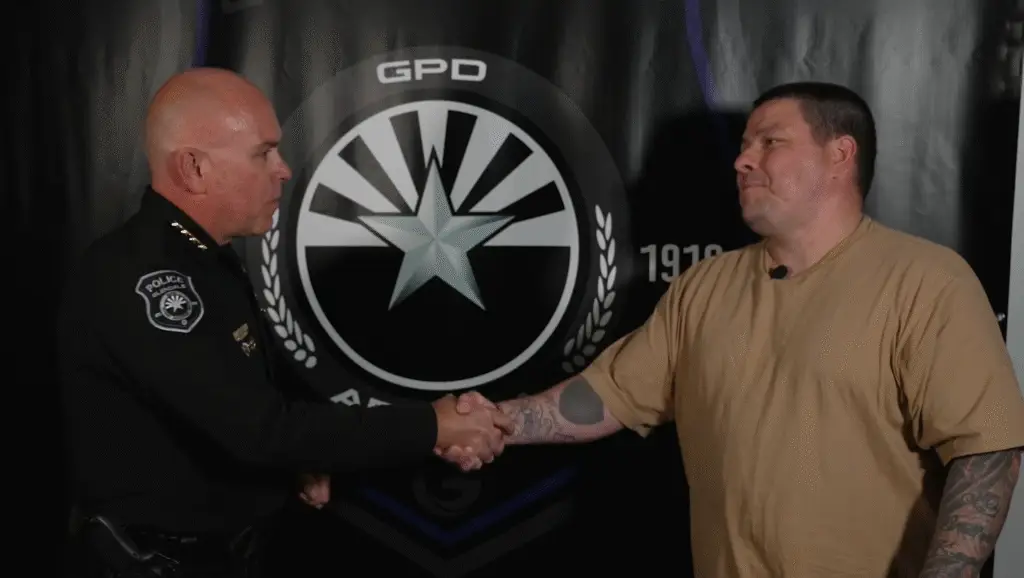
After committing to recovery, Bryan reached one year of sobriety and chose to mark the milestone in a meaningful way. He met with Glendale’s police chief and presented him with his one-year sobriety coin as a symbol of gratitude and transformation.
The moment was emotional for everyone involved. For law enforcement leaders, it served as a powerful reminder that compassion-based policing can have long-term impact beyond a single call or incident.
Bryan has now surpassed 16 months of sobriety and continues to build stability in every area of his life.
Paying It Forward in Recovery Work
Today, Bryan works in the behavioral health field right here at Cornerstone Healing Center, where he supports individuals who are facing many of the same struggles he once did. His lived experience allows him to connect with clients in a deeply authentic way.
He often shares that recovery gave him something he had been missing for years: purpose.
By working with others in treatment and early sobriety, he now helps people see what is possible on the other side of addiction, not as a theory, but as someone who has lived it.
Why Stories Like This Matter
Recovery rarely happens because of one single moment. More often, it grows from repeated moments of support, dignity, and human connection. Bryan’s story highlights how compassion from community institutions, combined with treatment and recovery resources, can help people reclaim their lives.
Addiction can isolate people and convince them that change is out of reach. Stories like this show the opposite. With the right support, the right encouragement, and access to quality care, recovery is possible.
Why Stories Like This Matter
If you or someone you love is struggling with substance use or mental health challenges, help is available. Recovery does not require perfection. It starts with one honest step and the willingness to accept support.
At Cornerstone Healing Center, our team works every day with individuals and families seeking a path forward. Our team offers evidence-based treatment, compassionate care, and real-world recovery support.
Contact us today to begin your recovery journey.
Help is closer than you think. Your story is not finished.
Begin Your Recovery Journey Today
Reach out to the compassionate team Cornerstone Healing Center today to start your journey toward well-being and lasting sobriety.